CN
CN Apr 27, 2026
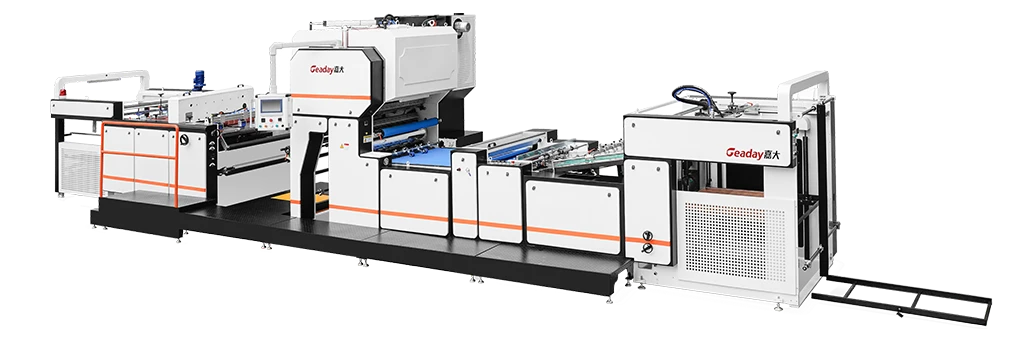
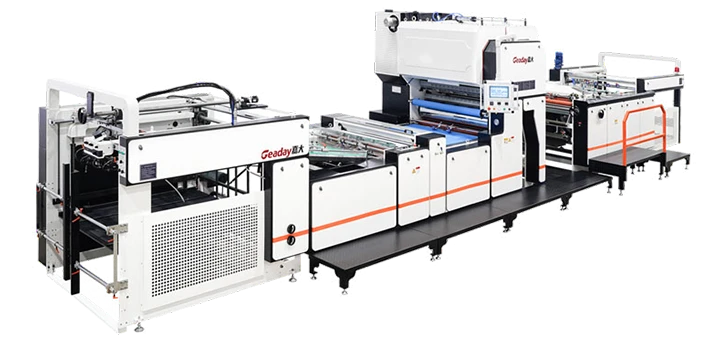
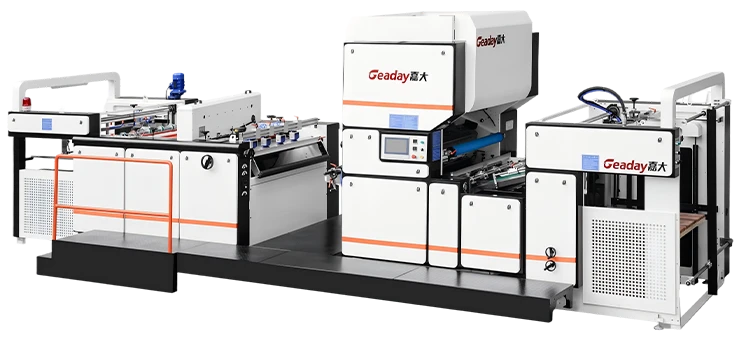
You’ve probably asked the question: How do print shops and packaging converters push out thousands of perfectly laminated sheets every single day without the finish peeling, bubbling, or slowing the whole line down? The short answer is that they don’t rely on a single machine. They rely on an integrated, intelligently choreographed production cell—what industry engineers refer to as a High‑Speed Laminating System. It’s the difference between a solo instrument and a full orchestra. If you’re evaluating equipment for a commercial print floor or a packaging converting line, understanding the anatomy of this system isn’t optional—sloppy lamination kills margins, wastes film, and sends jobs straight to the reject pile.
Why Those “Fast” Standalone Laminators Keep Letting You Down
I’ve walked through enough print floors to know the frustration. Someone buys a “fast” standalone laminator—80 m/min, the spec sheet promises—and within a week, operators are cursing. The feeder jams every fifteen sheets. Film tension drifts so badly that curled edges start appearing mid-run. Temperature overshoot on restart scorches a hundred sheets before anyone notices.
Standalone laminators, even well-built ones, hit a hard wall in continuous high-volume production because they lack the peripheral intelligence that keeps a line stable. The spec-sheet speed means nothing if your paper handling system can’t deliver sheets at that rate, or if the cooling section is too short to bring the laminated stack down to room temperature before trimming. This is precisely why high-mix print businesses and packaging converters eventually stop chasing single-machine specs and start looking at fully integrated configurations.
The Four Modules That Actually Determine Your Throughput
When you strip away the marketing language, a production laminating line comes down to four interdependent modules—and weakness in any one of them becomes your bottleneck.
1. The Feeding and Registration Section
Speed starts before the lamination nip. A high-performance sheet feeding system with ultrasonic double-sheet detection and servo-driven registration gates can sustain over 10,000 sheets per hour without misfeeds or overlapping errors. The difference between a vacuum-belt feeder and a friction feeder shows up most clearly when you’re running lightweight stock (80 gsm) or coated papers that stick together in humid conditions.
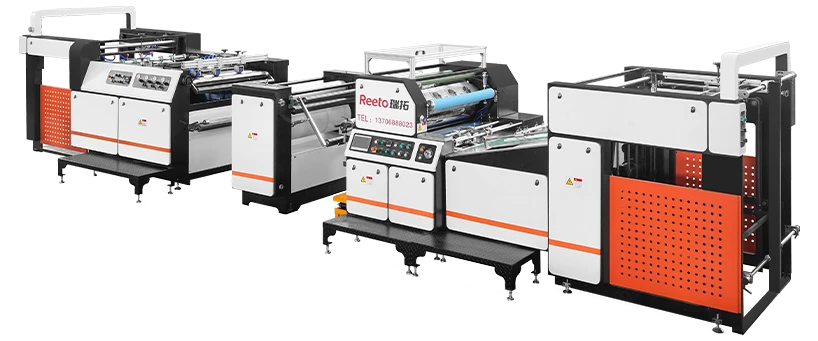
“Perfect lamination begins with perfect registration,” a technician reminded me once—and he’s right. A 1 mm misalignment at the feeder turns into a 3 mm film overhang after trimming, which becomes a customer complaint.
2. The Lamination Unit Itself: Heat, Pressure, and the Gap No One Adjusts
This is where the sandwich happens. Heated rollers—ideally oil-heated for thermal stability—maintain temperature tolerance within ±1°C across the full roller width. Cheaper cartridge-heater designs create hot spots that cause uneven film adhesion on wide-format sheets.
I pay particular attention to the nip—the contact line between the upper and lower rollers. Pneumatic pressure control with closed-loop feedback maintains consistent bonding force regardless of film thickness changes (switching from 1.2 mil to 3 mil, for instance). Without it, you get silvering—those hazy micro-bubbles that ruin a photograph’s black areas—or edge lift within 24 hours.
3. The Film Unwinding and Tension Subsystem
This is the module even experienced buyers overlook. Automatic tension control on the unwind stations—using load cells, not just spring-loaded dancers—compensates for the decreasing roll diameter as film runs out. If tension wanders, film webbing issues emerge: the laminate stretches unevenly, cooling pulls it back, and suddenly your finished sheets look like potato chips.
Swing-out pneumatic mandrels on the unwind shafts save operators a ton of physical strain during fast film changeovers. I’ve seen shops where film loading took 12 minutes and required two people; with ergonomic mandrel design, one operator does it in under three.
4. The Cooling, Slitting, and Stacking Exit Zone
Heat goes in; heat must come out—fast. A rushed cooling section leaves latent heat in the laminate stack, and that residual warmth is what causes sheet curl and blocking when sheets rest overnight. Extended cooling tracks with forced-air fans and chilled steel rollers bring the web or sheet surface temperature below 30°C before it ever meets a blade.
Downstream, edge slitters trim excess film oversize automatically. Then the sheet separator and stacker—often pneumatic—counts, jogs, and piles finished pieces into neat lifts ready for die-cutting, folding, or direct packaging. In automated lines, robotic palletizing comes right after, stacking up to 150 finished boxes per hour without human touchpoints.
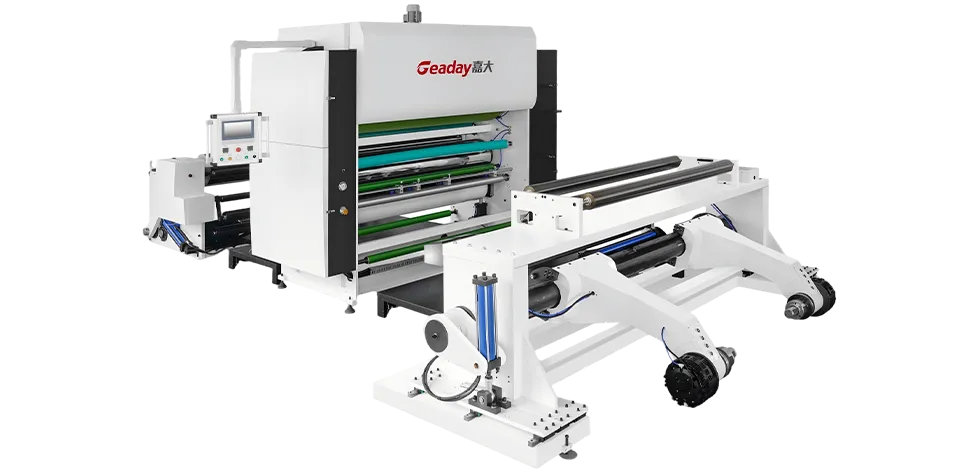
Comparing Your Options: Where a Dedicated Solution Wins
For shops doing a few dozen pouches per day, a desktop pouch laminator works fine—feed one carrier pouch, wait, repeat. For mid-volume shops, a standalone roll laminator speeds things up with continuous film, and some even include basic trimmers. Neither, however, solves the integration problem. Standalone roll machines still leave material handling, tension stability, and thermal management as operator-dependent variables rather than automated constants.
The frustration I hear most often from production managers is this: they invested in a “fast” roll laminator—60 meters per minute rated speed—only to discover the feeder couldn’t sustain more than 30 m/min on thin stock, and the cooling zone was so short they had to slow the entire line just to prevent blocking. They ended up with a 35% actual utilization rate. A purpose-built production system—integrating feeding, laminating, cooling, slitting, and stacking—closes that gap between theoretical spec and daily reality.
Why Material Versatility Separates the Workhorses from the One‑Trick Ponies
Early in my career, I assumed a laminator that ran BOPP beautifully would handle PET the same way. Painful lesson: PET’s higher melting point means the roller temperature needs roughly 15–20°C more; nylon stretches differently under tension. A system that restricts you to one or two film types limits the customers you can serve.
A well-engineered line processes BOPP, PET, and nylon laminates up to 15 mil thick without forcing the operator to rebuild settings from scratch every time. Recipe-based PLC controls with stored parameters—temperature profile, roller gap, tension curve, line speed—make switching between a glossy brochure job and a matte card job a two-minute task instead of a thirty-minute calibration ordeal.
For packaging converters, material traceability control built into the system’s data platform can track which film lot was applied to which customer order—essential when your client is a food brand demanding ISO 12647-compliant quality records throughout the production chain.
The Data Layer You Didn’t Know You Needed
The quieter revolution in lamination isn’t about speed at all—it’s about visibility. Smart laminating systems equipped with IoT sensors and human-machine interfaces log runtime, downtime causes, temperature trends, and film consumption automatically. Production managers stop guessing which shift burned more film; the data tells them.
If your operation spans multiple machines from different manufacturers, this used to be a data-connectivity nightmare. New interoperability platforms now allow converters to pull real-time metrics from mixed-brand equipment into one dashboard, creating the end-to-end transparency that Industry 4.0 promises without vendor lock-in. Before you buy, here’s a concrete question to ask the supplier: Does your HMI export structured data compatible with our existing MES or ERP, or am I looking at yet another information silo?
Making the Insider’s Call: What to Verify Before You Sign
I’ve been at the receiving dock when a new installation wouldn’t power on because nobody confirmed whether the facility had 380V‑3‑phase or only 220V single-phase. Electrical infrastructure sounds boring—until it delays commissioning by three weeks.
Here’s my punchlist for anyone evaluating a production‑grade laminating configuration:
-
Voltage compatibility: Industrial power requirements can require a transformer if your facility isn’t wired for it.
-
Roller width vs. typical job formats: Running an A3 job on a 1,600 mm wide system wastes film and energy if you rarely print wide format.
-
Warm‑up time and standby recovery: Ask for video proof, not just spec-sheet claims.
-
Preventive maintenance access: Can operators clean the rollers and inspect nip alignment without a service call?
-
Standard compliance: For packaging, certifications aligned with ISO 12647 and applicable printing safety standards demonstrate process maturity.
Where the Industry Is Heading—and What It Means for Your Next Investment
The industrial laminating market is projected to reach $830.3 billion by 2034, growing at over 6% annually, driven by e‑commerce packaging demand and increasingly stringent quality standards for branded goods. We’re seeing a clear tilt toward modular, software-connected, and solvent‑free laminating technologies that allow converters to meet corporate sustainability mandates without sacrificing speed or bond strength.
Automation levels in laminating lines have risen roughly 22% since 2021, reflecting the broader Industry 4.0 shift in finishing equipment. And yet the most productive shops I’ve seen aren’t the ones chasing the absolute highest spec-sheet speed. They’re the ones who systematically eliminated the gaps between modules—feeding, thermal control, cooling, slitting, stacking—until the line ran as one organism. The speed takes care of itself, provided the architecture earns it.
For a closer look at how these principles are engineered into modular production platforms designed for mid-to-high-volume environments, check Geaday’s current range and technical documentation. There’s no substitute for walking through a real configuration—digital or physical—and picturing your own operators, your own substrates, and your own growing order book running through the line.