CN
CN Jul 15, 2026
Last month, a mid-sized packaging converter in Ohio told me his biggest customer just updated its supplier code of conduct. All laminated cartons must now be produced with solvent-free adhesives, and compliance has to be documented by Q3. His existing wet laminator had served him well for a decade, but it couldn’t handle the new pre-coated film stocks the client was specifying. That conversation isn’t an outlier — it’s the leading edge of a structural shift that’s quietly rewriting the rules for film lamination.
Market data backs up what shop-floor managers are already feeling. According to Smithers’ 2024 report “The Future of Laminating Adhesives to 2029,” the global pre-coated film segment is projected to grow at a CAGR of 5.8%, outpacing solvent-based alternatives by more than two to one. The driver isn’t just regulatory pressure; it’s a cascade of brand commitments, retailer scorecards, and consumer preference that’s tilting the field toward thermal laminating processes — the technology that activates pre-coated films without liquid chemistry.
What’s Fueling the Switch — and Why It’s More Than a “Green” Story
When people hear “eco-friendly,” the first association is often higher cost or compromised performance. With modern pre-coated films, neither holds true — and that’s precisely why adoption is broadening so fast.
Three forces are converging:
-
Regulatory tightening. The EU’s Packaging and Packaging Waste Regulation (PPWR) and updated EPA guidelines on hazardous air pollutants are making solvent-handling more expensive and operationally complex. Pre-coated films eliminate on-site solvent mixing, slash VOC reporting burdens, and simplify permitting.
-
Retailer mandates. From Amazon’s Frustration-Free Packaging programs to Walmart’s Project Gigaton, major retailers are scoring suppliers on material health. A pre-coated film structure with a mono-material or recycle-ready design checks multiple boxes simultaneously.
-
Total applied cost savings. While the price per linear meter of a pre-coated film can be slightly higher than the raw materials for wet lamination, converters consistently report net savings when they account for reduced energy, zero solvent procurement, faster clean-up, and lower scrap rates — especially on short to medium runs.
These factors matter because they’re not cyclical. They’re structural changes that make the skill of running pre-coated films efficiently a genuine competitive advantage. And that advantage starts with having the right converting equipment on the floor.
The Equipment Gap: Why Not Every Laminator Is Ready
One misconception I hear frequently is that “any laminator can run pre-coated film — you just turn off the coating station.” Technically, that’s true in the same way any car can drive on a frozen lake. What matters is control.
Thermally activated pre-coated films require a level of temperature precision, pressure uniformity, and web tension management that older solvent-era machines were never designed to deliver. A 2023 technical bulletin from the Flexible Packaging Association noted that inconsistent nip temperature — common in aging drum-type laminators — is the number one cause of delamination complaints in pre-coated film applications, leading to customer rejections that erode the very cost advantage the technology is supposed to provide.
Here’s a side-by-side look at the critical differences that separate a machine built for pre-coated film work from a converted wet laminator:
| Critical Parameter | Typical Wet Laminator (Retrofitted) | Purpose‑Built Thermal Laminating System |
|---|---|---|
| Nip temperature variance | ±8 °C across web width | ±2 °C with closed-loop PID control |
| Pressure profile consistency | Manual or pneumatic, often uneven at edges | Hydraulic or servo-driven with digital profiling |
| Tension zone isolation | Two or three zones, often coupled | Four or more independently controlled zones |
| Energy consumption on start-up | High (heating large mass) | Optimized with rapid-heat roller technology |
| Changeover time (job to job) | 25–45 minutes | Typically under 12 minutes |
For the Ohio converter I mentioned earlier, the “aha” moment came when we mapped his rejection data against the temperature log from his existing machine. The pre-coated film he was trialing required a steady 105 °C activation window. His actual readings were swinging between 93 °C and 117 °C across each reel. The film wasn’t the problem; the thermal delivery system was.
What to Look for When Upgrading for Pre‑Coated Film Work
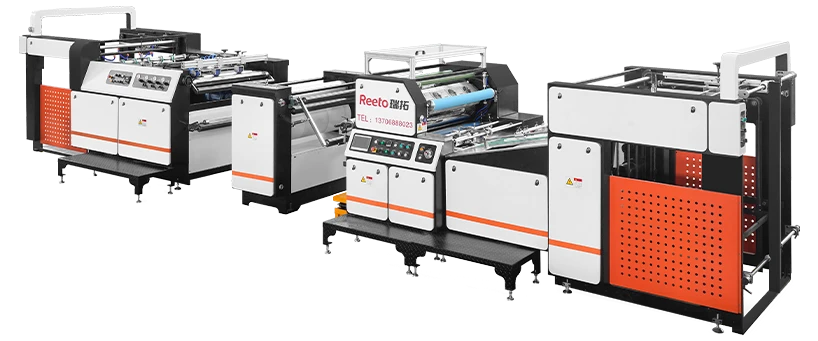
If you’re evaluating equipment to capture the growing pre‑coated film market, the conversation should move beyond “max speed” and “web width.” Five attributes make the biggest difference in daily operation:
-
Zoned heating with feedback loops. Look for machines that use multiple independently controlled heating zones across the laminating roller, not a single cartridge heater. A well-engineered system adjusts power in real time based on actual roller surface temperature, not just setpoint.
-
Servo-driven nip adjustment. Pre-coated films, particularly thinner gauges used in flexible packaging, respond badly to pressure spikes. Servo-controlled nip rollers let operators store job-specific recipes and achieve repeatable results across shifts.
-
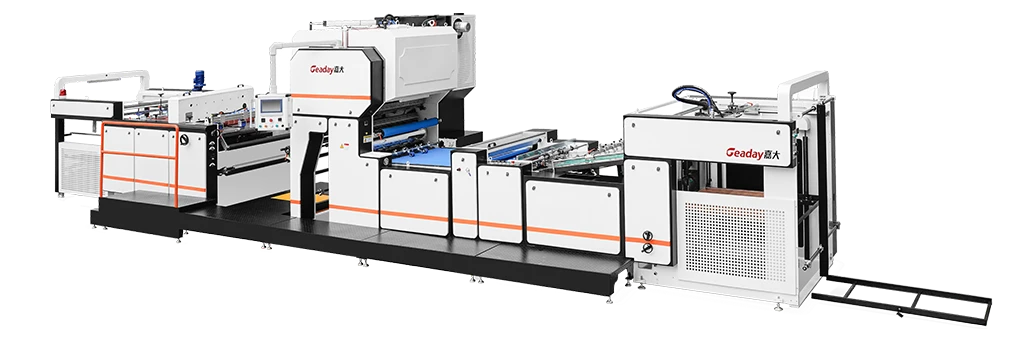
Substrate flexibility baked in. An increasing share of pre-coated films is being applied to paperboard, corrugated micro-flute, and even recycled-content boards that behave differently than virgin SBS. A machine that lets you fine-tune tension and dwell time for each substrate type will pay for itself in reduced set-up waste. For a closer look at how modern laminating systems handle diverse materials, explore equipment built for multi-substrate thermal film processing.
-
Energy monitoring as standard. With energy costs remaining volatile, the ability to track kWh per thousand linear meters for each job is moving from “nice to have” to essential. Some of the newest designs use regenerative braking on unwind/rewind stations and idle-mode heater power-down that trims energy consumption by 15–20% compared to previous generations.
-
Serviceability and remote diagnostics. A machine that runs 16 hours a day needs to be maintained without heroic effort. Quick-change roller cartridges, easy access to heating elements, and built-in remote diagnostic ports reduce mean time to repair.
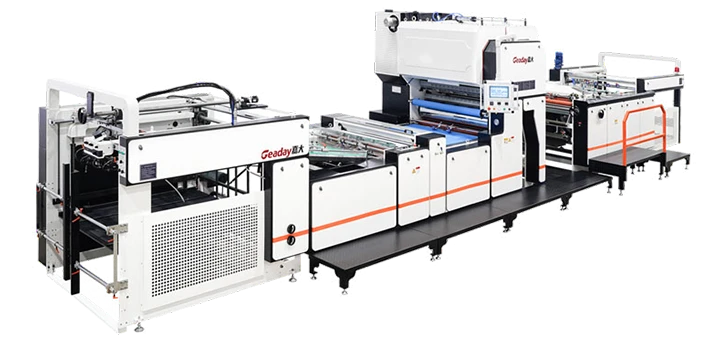
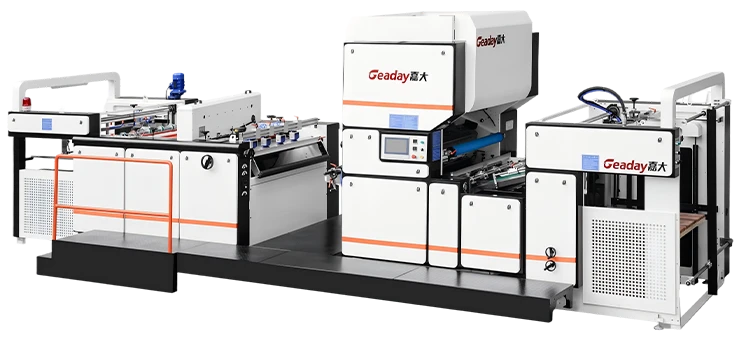
These aren’t abstract specifications. A specialty folding carton plant in the Midwest that made the transition in early 2024 documented a 32% reduction in film waste and a 40% drop in customer complaints related to lamination quality within the first six months — numbers they directly attribute to the tighter process control of their upgraded film processing line. You can see detailed configuration examples for thermal laminating solutions that target exactly these pain points.
Navigating the Transition Without Stalling Production
One worry that keeps operations managers up at night: “How do we install new equipment without missing delivery dates?” It’s a valid concern, and the answer often lies in phased commissioning.
Most converters start by designating a subset of jobs — often the high-margin, shorter-run orders where the pre-coated advantage is clearest — to run on the new line while the existing wet laminator continues handling long-run legacy work. This parallel approach not only de-risks the transition but also gives operators time to build familiarity with the new thermal laminating process before the machine becomes mission-critical. Several of the plants I’ve worked with report that operators who initially resisted the change became the strongest advocates once they experienced a full shift without solvent odors and lengthy wash-ups.
Training matters just as much as iron. The best outcomes I’ve observed happen when suppliers provide hands-on support during the first week of production, not just a binder of manuals. Ask potential partners how many field days they include, whether they train on your actual substrates, and whether they can supply pre-programmed process recipes as a starting point.
Where the Market Is Heading — and How to Stay Ahead
Forecasts from Allied Market Research and Mordor Intelligence suggest the pre-coated film segment could cross $4.2 billion globally by 2030, driven not just by food and pharmaceutical packaging but by rapid growth in e-commerce mailers, luxury cartons, and sustainable cosmetics packaging. Each of these applications places a premium on consistent, high-clarity lamination that can be achieved with recyclable or compostable film structures.
What’s particularly telling is the downstream pull: brands are now specifying the lamination method, not just the material. A well-known personal care brand’s 2025 packaging guidelines, for instance, explicitly require “thermally activated, solvent-free lamination” for all paper-based secondary packaging. When the brand spec dictates the process, converters who can’t comply are locked out of the supply chain — regardless of how competitive their pricing is on other dimensions.
For printing and packaging companies, the strategic question is shifting from “Should we invest in pre-coated film capability?” to “How quickly can we build a reproducible, quality-controlled thermal lamination workflow that earns us preferred-supplier status?” If you’re looking to align your production floor with where the market is clearly heading, it’s worth taking a closer look at how Jiada’s approach to eco‑conscious film laminating equipment supports converters making this exact transition.
If You’re Considering the Switch
Choosing the right equipment path isn’t a one-size-fits-all decision. It depends on your typical run lengths, the substrates you process, your energy costs, and the specific sustainability commitments your customers are asking you to meet. What’s become clear from the market data — and from the experiences of converters who’ve already moved — is that purpose-built thermal laminating technology shortens the learning curve and delivers the process consistency that pre-coated films demand.