CN
CN Jun 30, 2026
A plant manager in Ohio once told me, “It’s not the laminator that kills my numbers — it’s the three seconds of drift every time we splice a new roll.” He ran a fleet of machines built on standard AC drives with encoder feedback. The drives were reliable, but at speeds above 200 m/min, the microscopic hesitation during roll changes turned into a visible wrinkle in the adhesive layer. Multiply that by 60 splices a day, and the waste was no longer microscopic.
That conversation captures why the debate between servo and standard drive systems has moved from the engineering department to the boardroom. In an era where flexible packaging converters are chasing sub-1% waste and single-minute roll changes, the choice of motor and control architecture is effectively a choice about your factory’s competitiveness. Yet the decision is rarely as simple as “servo is better.”
This article breaks down the real trade-offs between servo and standard drives in high-speed laminating lines, using data from operating plants, maintenance logs, and performance benchmarks. Along the way, we’ll look at how machine architecture — including the growing shift toward vertical-format laminating systems — interacts with drive selection to shape floor space, accessibility, and overall line efficiency.
Why Drive Technology Became the Bottleneck
Twenty years ago, the limiting factor on a laminator was usually the drying tunnel or the winding tension. Today, solvent-free adhesives, energy-curing systems, and ultra-thin substrates have pushed the mechanical ceiling much higher. The bottleneck has migrated to the precision of motion control.
Standard drive systems typically pair an AC induction motor with a variable frequency drive (VFD) and a feedback encoder on the main shaft or nip. The architecture works well for steady-state running: the VFD maintains a set frequency, the encoder provides velocity data, and a PLC or motion controller adjusts the output in small increments. But during acceleration, deceleration, or sudden load changes — like a splicing event or a variation in coating weight — the control loop relies on a relatively slow update rate and simplified PID tuning. The result is a momentary tension deviation that can reach ±5–8 N in some installations, enough to cause tunneling, baggy edges, or misregistered cold-seal patterns on downstream packaging lines.
Servo systems, by contrast, close the loop at the drive level. A synchronous servo motor with a high-resolution absolute encoder sends position and velocity data to the drive every few microseconds. The drive’s internal processor updates torque commands in real time, compensating for disturbances before they propagate through the web. In a 2023 survey of 120 flexible packaging converters by the Flexible Packaging Association, 68% of plants that retrofitted servo drives on their primary laminators reported a reduction in splice-related waste of more than 40%, and 41% saw an overall OEE increase of at least 8 percentage points. Those numbers align with what maintenance teams observe on the floor: fewer manual adjustments, fewer operator interventions, and much less film lost during ramp-up.
The Five Dimensions That Matter Most
When comparing drive architectures, avoid the temptation to reduce the decision to a single spec like “speed regulation accuracy.” The impact of drive choice shows up in at least five interconnected areas.
-
Tension control during transients. This is the headline difference. Servo drives can maintain tension within ±0.5 N even during splicing at 300 m/min, thanks to torque feedforward and load cell integration at the drive level. Standard VFD/encoder systems might achieve ±2 N in steady state but routinely spike to ±8–12 N during transients. For thin gauge films — 12 µm PET or 20 µm BOPP — those spikes translate directly into yield loss.
-
Registration accuracy for pre-printed webs. If your laminator handles pre-printed films with eye marks, the drive’s ability to follow a dynamic position profile becomes critical. A servo system can execute electronic camming, syncing the nip to a virtual master with sub-millimeter accuracy. Standard drives relying on a mechanical line shaft or external registration controller typically show higher registration errors above 250 m/min, especially when web tension is not perfectly stable.
-
Energy consumption and peak demand. Servo motors are more efficient at partial loads, and they can regenerate energy during braking, feeding it back to the DC bus. In a typical 3-layer laminator running two shifts, the difference in electricity cost between a fully servo-driven line and an equivalent VFD-driven line can reach $2,500–$4,000 per year — not a game-changer, but meaningful when summed across a multi-machine plant.
-
Maintenance and mean time between failures (MTBF). AC motors and VFDs are simple and rugged; many plants have electricians who can swap a VFD in 20 minutes. Servo systems, with their cables, feedback connectors, and drive parameters, require specialized training. However, the absence of mechanical components like gearboxes and clutches in direct-drive servo setups often leads to a longer MTBF. A mid-sized converter in Wisconsin documented a drop from 6 unplanned stops per month to 1.2 after transitioning to servo-driven machines equipped with closed-loop servo tension control, mainly because tension-related jams and wraps disappeared.
-
Integration with Industry 4.0 tools. Servo drives generate a stream of high-resolution data — torque profiles, position following errors, temperature trends — that can feed predictive maintenance algorithms and OEE dashboards. Standard drives provide basic operating parameters but lack the granularity required for early fault detection.
Servo vs Standard Drive: A Side-by-Side Look
| Dimension | Standard AC Drive + Encoder | Servo Drive System |
|---|---|---|
| Tension accuracy during transients | ±5–12 N | ±0.5–2 N |
| Registration at >250 m/min | Requires external controller; higher errors | Electronic camming; sub-mm accuracy |
| Energy efficiency at partial load | ~75–85% | ~90–95% |
| Initial equipment cost | Lower | 15–30% higher |
| Maintenance skill level | General electrical | Drive specialist recommended |
| Data availability for analytics | Basic | High-resolution, real-time |
| Best suited for | Steady speeds, thicker substrates, long runs | Frequent splices, thin films, high-speed, variable formats |
The table suggests a clean split, but real production environments are more nuanced. The same plant may run a 200 µm rigid structure in the morning and a 30 µm lidding film in the afternoon. If the machine architecture makes format changeovers cumbersome, even the best drive system will sit underutilized while operators perform manual adjustments.
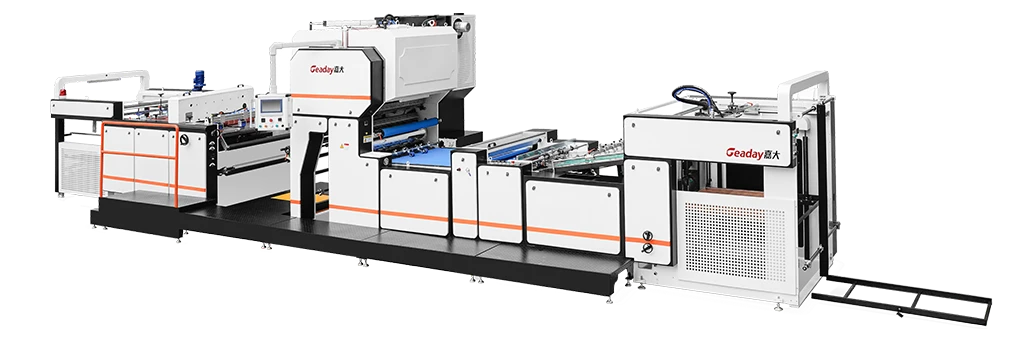
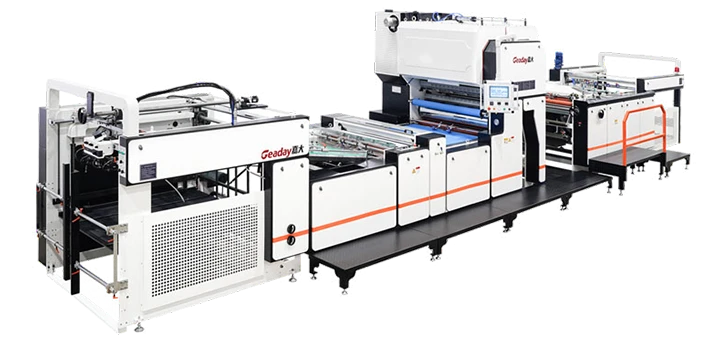
This is where the physical layout of the laminator enters the equation. Many converters looking to upgrade drive technology have simultaneously re-evaluated machine format. A vertical web path, for instance, can reduce the floor footprint by up to 40% compared to a horizontal line of equivalent capacity, while also improving operator access to both sides of the web for webbing and cleaning. If you are running a multi-layer structure on a compact high-speed laminating solution with servo drives, the synergy between fast format changes (enabled by the drive) and an ergonomic layout can multiply the productivity gains.
When Standard Drives Still Make Sense
Despite the performance advantages of servo technology, there are valid scenarios where standard drives remain the pragmatic choice. Companies laminating only a handful of standard structures — say, 12 µm PET to 75 µm PE for a single retail bag format — may never push their machines into the transient regimes where servo makes a measurable difference. If the laminator runs at a constant 150 m/min for six hours without a splice, the added capital cost of servo may not pay back within an acceptable window.
Similarly, plants in regions with unstable power quality or a shortage of drive-trained technicians may prefer the forgiving nature of VFD/induction motor packages. A standard drive can tolerate voltage swings that might trigger a servo drive’s protective fault. Maintenance teams can stock one type of motor and one type of drive, simplifying spare parts inventory.
However, a pattern has emerged among converters who initially opted for standard drives and later upgraded: almost none regretted the move. In follow-up interviews conducted by an independent industry consultant (shared at the 2024 AIMCAL R2R Conference), 52 of 56 surveyed plants that retrofitted servo drives on existing laminators said they would make the same decision again, citing not only waste reduction but also a measurable decrease in operator fatigue — fewer alarms, fewer manual tension tweaks, less rework.
Making the Decision: A Three-Question Framework
To cut through the specifications and sales pitches, ask these three questions about your own operation:
-
What is the true cost of a splice-related wrinkle? Calculate it not just in film scrap, but in downstream packaging line stoppages, customer returns, and brand reputation risk. In many snack and pharma packaging lines, a single undetected lamination defect can scrap an entire pallet of finished product.
-
How many changeovers per shift do you actually perform? The industry average has been rising for years as order sizes shrink. If you do eight or more splices or product changes per shift, transient performance is a daily P&L item, not a theoretical concern.
-
Does your current machine layout help or hinder changeover speed? A drive system that completes a recipe change in 30 seconds is of limited value if operators need 12 minutes to re-web a horizontal machine. Consider whether the machine’s physical design amplifies or diminishes the benefit of better motion control.
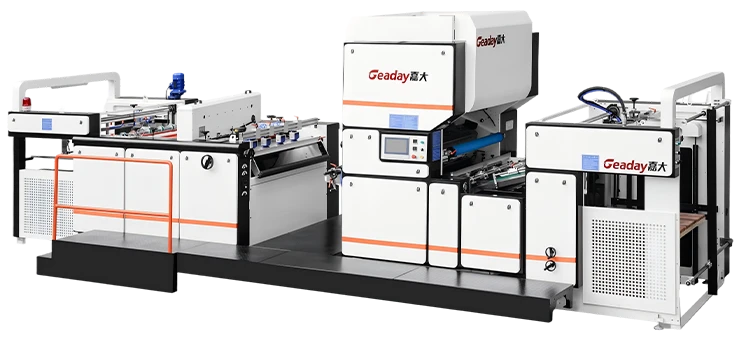
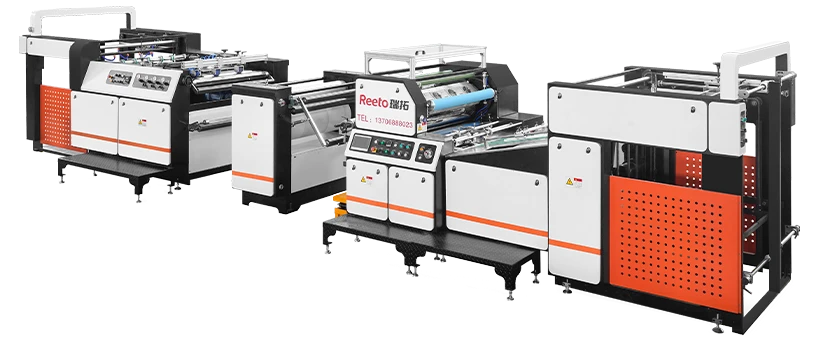
If your answers to these questions point toward a need for tight transient control, frequent format changes, and a layout that keeps floor space and operator workflow in balance, you may want to move beyond general comparisons and explore Geaday’s automatic laminating configurations. Geaday engineers have focused on marrying servo drive architecture with a vertical web path specifically to address the pain points converters describe: space constraints, long re-webbing times, and tension instability during splicing. The result is a range of machines where the drive technology and the mechanical design are developed together, not retrofitted independently.
Where the Technology Is Headed
The convergence of servo control, IIoT connectivity, and modular machine design is reshaping the laminating floor. We are starting to see laminators that automatically adjust tension profiles based on real-time web flatness measurement, or that self-tune their drive parameters after every splice by analyzing the previous five cycles. These capabilities depend entirely on having a servo backbone with sufficient data bandwidth and processing power.
At the same time, the cost gap between servo and standard systems continues to narrow. A decade ago, a servo-driven laminator carried a 40–50% premium over an equivalent VFD-driven model. Today, that premium is often below 20% for the main drive axes, and when you factor in the reduction in auxiliary equipment — fewer dancer rollers, less pneumatic tension control hardware — the total installed cost delta can be surprisingly small.
The key is to evaluate drive choice not as an isolated component spec, but as part of a system architecture decision that touches how quickly you can change jobs, how much film you waste at every splice, and how reliably you can ship defect-free rolls to your customers. When viewed through that lens, the three seconds of drift our plant manager in Ohio worried about become much more than a drive parameter. They become a direct lever on margin.
Performance data cited in this article is based on publicly available industry surveys, user presentations at technical conferences, and general engineering principles. Individual results will vary depending on substrate, speed, operating practices, and machine configuration.