CN
CN Jul 07, 2026
A packaging supervisor once told me, “We cranked up the line speed by 15% to hit a rush order, and the very next morning, half the batch came back with peeling film.” That single shift of overconfidence cost them the client’s trust — and a five-figure reprint. The culprit? Not the film, not the adhesive, but the speed dial. Over‑speeding a laminator is one of the most common, yet least discussed, productivity killers in the finishing department. While it feels like a shortcut, it’s almost always a fast track to waste.
If you’ve ever watched a freshly laminated sheet emerge with a silvery haze, tiny bubbles trapped beneath the surface, or edges that lift after die-cutting, chances are your machine was simply running beyond its optimal process window. The temptation is understandable: press deadlines tighten, backlogs grow, and the laminator’s speed control looks like the easiest lever to pull. But thermal lamination isn’t just about sticking film to paper — it’s a time‑dependent thermomechanical bond. When you shorten the dwell time under the heated roller, you starve the adhesive of the energy it needs to flow, wet out the substrate, and form a permanent mechanical lock.
What Really Happens When You Push the Speed Too High
At the nip — the point where the heated roller meets the pressure roller — three things must happen within a fraction of a second: the adhesive layer must reach its activation temperature, flow into the microscopic valleys of the substrate, and then cool under pressure to set the bond. TAPPI technical papers on extrusion coating and lamination emphasize that dwell time, defined as the contact arc length divided by line speed, is the master variable governing adhesion strength. When speed increases, dwell time drops proportionally. The result is a cascade of failures:
-
Incomplete wet‑out. The adhesive remains too viscous to penetrate the paper’s surface fibers, leading to bond strength that can be 30–50% lower than specification.
-
Thermal shock. The sudden temperature drop on the exit side causes the film to shrink unevenly, creating curl and tunneling, especially with thinner films.
-
Entrapped air. At high speeds, air cannot escape the nip smoothly and gets trapped as micro‑bubbles, which expand later during post‑press heat exposure or in end‑use environments.
A trial run I observed in a label converting plant compared a BOPP thermal film laminated at three speeds: the recommended 15 m/min, a boosted 22 m/min, and an aggressive 30 m/min. At 15 m/min, peel strength exceeded 4 N/cm and clarity was flawless. At 22 m/min, peel strength dropped to 2.8 N/cm, with faint silvering visible only under a loupe. At 30 m/min, peel strength collapsed below 1.5 N/cm and the entire sheet showed visible tunneling. The line supervisor admitted they often ran at 25 m/min “to stay ahead of the press.” In reality, they were producing defective material at a faster rate — hardly a productivity win.
The fix isn’t simply “slow down blindly.” Correct speed is a moving target that depends on film chemistry, paper caliper, moisture content, and even roller hardness. That’s precisely why more converters are turning to equipment that takes the guesswork out of the equation. Rather than relying on an operator’s instinct, modern speed‑optimized laminating systems use sensor feedback to maintain the exact process window across varying materials — a topic we’ll return to shortly.
How to Dial In the Right Speed — and Keep It There
Instead of chasing a universal “fastest safe speed,” a more reliable approach is to define the minimum dwell time your specific adhesive requires and let that govern your maximum speed. Here’s a practical, three‑step method adapted from what many process engineers use on the shop floor:
1. Find the adhesive’s activation threshold. Start with the film’s technical data sheet. Reputable suppliers provide a recommended temperature range and a minimum dwell time, often expressed in seconds. If it’s not listed, run a simple matrix: laminate a test strip at a fixed temperature while gradually increasing speed in 2 m/min increments. Note the first speed at which peel strength drops below your internal standard or hazing appears.
2. Calculate your maximum speed. Measure the contact arc length under the main roller (a strip of carbon paper helps). Dwell time = arc length ÷ line speed. Rearrange: Max Speed = Arc Length ÷ Minimum Dwell Time. For example, a 20 mm arc length with a 0.8-second minimum dwell gives a maximum speed of 25 mm/s, or 15 m/min. That’s your ceiling — not a starting point.
3. Build a job‑specific speed reference table. One‑size‑fits‑all is the enemy of quality. Document the validated speed range for each combination of film, substrate, and temperature you run regularly. Laminate the chart and post it at the operator station.
Following this method can slash lamination‑related returns dramatically. In one folding carton plant, implementing a speed matrix based on the three‑step protocol reduced film-related rejects by 62% over six months, according to their internal quality logs. The key wasn’t just discipline, but also recognition that the machine itself must support consistent control. Even the best speed chart fails when the operator drifts back to old habits under scheduling pressure. That’s where automation re‑enters the picture.
Why Automation Changes the Speed Conversation
Ask any finishing manager what keeps them up at night, and “operator variability” usually ranks near the top. When a laminator relies purely on manual speed adjustment, the process is one tired shift away from generating scrap. Automated speed regulation isn’t about running faster — it’s about running at the right speed, every second of every job, without relying on human attention.
Some advanced laminating systems now incorporate infrared or laser‑based film temperature sensors that continuously monitor the adhesive layer as it exits the nip. If the temperature dips below the activation threshold — due to speed creep, changes in room conditions, or a sudden increase in substrate thickness — the system either reduces speed automatically or triggers an alert. This closed‑loop concept, similar to what’s used in web offset printing, turns laminating from an open‑loop art into a repeatable science.
Equipment that integrates intelligent speed regulation technology can also compensate for roller wear and ambient temperature swings that a static speed chart can’t cover. Over the lifetime of a silicone roller, for instance, the durometer gradually increases, altering the nip pressure profile. An automated system detects the resulting change in heat transfer and adjusts speed downward to maintain bond quality — something even a seasoned operator cannot perceive in real time.
[Image: diagram showing closed-loop speed control in a vertical laminator with sensor placement at the nip exit]
A Smarter Approach to Speed Management in Vertical Laminating
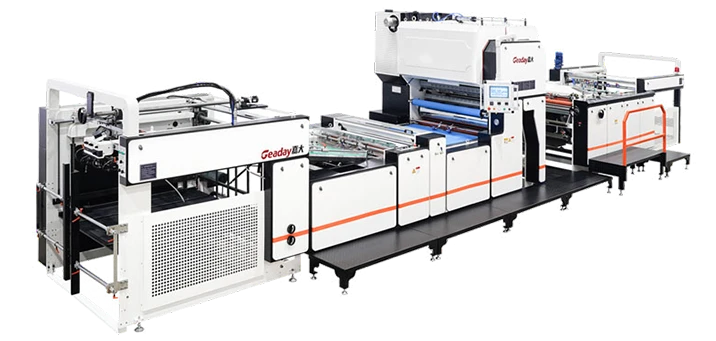
For operations that handle a wide variety of stocks — from lightweight coated paper to heavy board — vertical laminating configurations offer inherent advantages in speed consistency. The gravity‑assisted web path reduces tension fluctuations, and a smaller footprint means shorter web lengths between unwind and nip, which gives faster response when speed adjustments are made. When combined with automated speed control, these mechanical advantages help maintain an extremely stable dwell time across the entire run.
But not all vertical machines are created equal. The real difference lies in how the control architecture handles the relationship between speed, temperature, and pressure. Look for systems that offer integrated recipe management, where a single material code recalls all three parameters — temperature, nip pressure, and speed limit — simultaneously. This eliminates the “one setting at a time” tweaking that opens the door to over‑speeding.
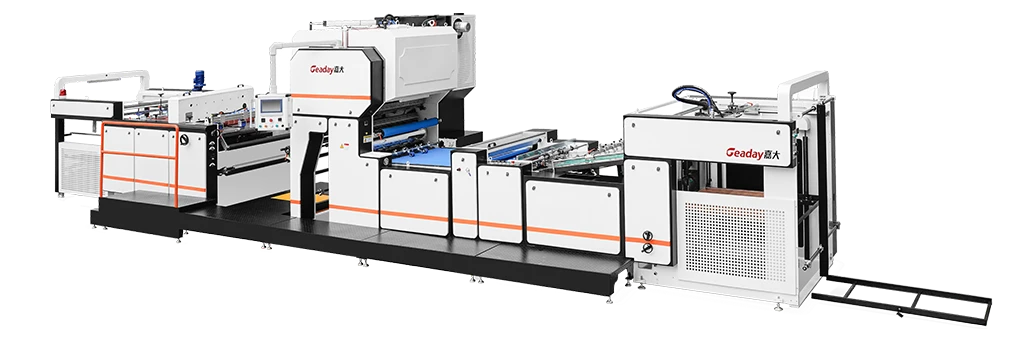
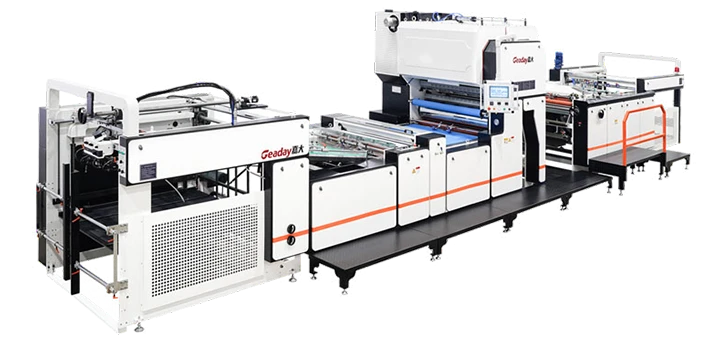
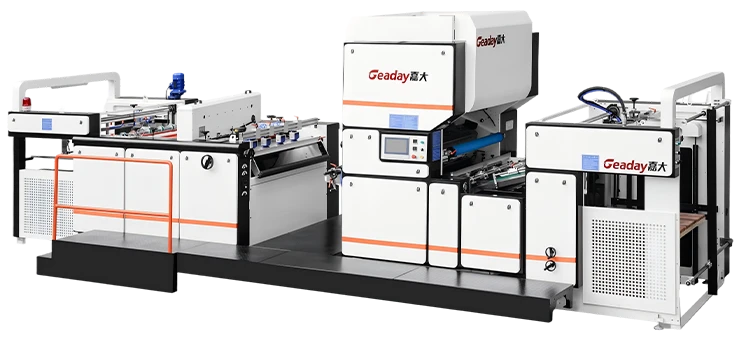
If you are evaluating options to eliminate speed‑related defects at the root cause, it’s worth taking a closer look at integrated auto‑speed laminator solutions that have been designed specifically for high‑mix production environments. The best ones make speed a dependent variable — driven by real‑time process measurements — rather than an independent input controlled solely by the operator’s thumb.
A Professional Step Forward
In my years observing finishing departments, I’ve noticed one unmistakable pattern: shops that treat lamination as a precision process rather than a commodity operation consistently win on both quality and cost. They measure dwell time in milliseconds, validate adhesion by the roll, and refuse to let the urgency of the moment override the physics of the nip. Those that don’t end up paying for the lost speed in returns, rework, and credibility.
If you want to move from reactive speed policing to a proactive system that safeguards quality at any production pace, you may want to explore how Jiada’s vertical laminating solutions approach the challenge. The portfolio includes models with integrated speed‑to‑temperature synchronization that maintains the critical dwell time even as job parameters shift — effectively building the expertise of your best operator into the machine’s logic itself.
Take the time to audit your current laminator’s speed‑related scrap rate. Add up the material cost, the labor for rework, and the intangible cost of late deliveries. The number often justifies an equipment upgrade faster than any product brochure can.
[Image: operator inspecting a perfectly laminated sheet under shop floor lighting with a vertical laminating system in the background]
Note: The speed recommendations mentioned in this article are generic guidelines. Always consult your film and adhesive suppliers for validated process parameters. The equipment referenced is representative of modern automation capabilities; specific features and performance may vary by model and configuration.