CN
CN Apr 24, 2026
If you have ever stood in front of a laminating machine that refuses to deliver a bubble‑free finish three times in a row, you already understand why choosing the right pre‑coated film laminating machine matters more than most spec sheets ever reveal. The problem is not the lack of options — it is the overwhelming number of them, each promising perfect results but often delivering hidden headaches instead.
The global industrial laminating machines market was valued at approximately USD 1.5 billion in 2024 and is projected to grow to USD 2.2 billion by 2031, expanding at a compound annual growth rate of 5.30%. With more equipment entering the market every year, buyers increasingly find themselves stuck between glossy marketing claims and the hard reality of daily production. So how do you cut through the noise? You stop looking at isolated features and start thinking like an operator, not a brochure collector.
What Drives Buyers to Start Searching — and What They Actually Need
Most people do not wake up wanting to research laminating equipment. They wake up because a production run ended with wrinkled covers, because too many sheets went into the recycling bin, or because a client rejected a batch due to visible silvering. The search for a thermal laminating solution almost always begins with a specific pain point, not a casual curiosity about new machinery.
Inconsistent finish quality ranks at the top of that frustration list. Some sheets come out gleaming and smooth; others show bubbles, edge lifting, or patchy adhesion. These defects might seem minor on a single sheet, but when the final product is a premium catalog, a retail package, or a high‑end brochure, they instantly damage credibility and eat into margins. Material compatibility is another silent productivity killer. Thin paper curls under excessive heat. Heavy ink coverage interferes with bonding. Coated stocks behave differently than uncoated ones. If the laminator cannot adapt without constant recalibration, operators end up spending more time fiddling with settings than producing finished goods.
Then there is the waste problem — not just material waste, but time waste. Slow feeding, misaligned sheets, unstable pressure, and unreliable separation mechanisms all add friction to the workflow. A laminating station that should be a seamless part of finishing becomes a bottleneck instead. That is why buyers are not simply purchasing equipment. They are trying to reduce defects, protect profit margins, and deliver better products with fewer operational risks.
What to Look for Before You Buy: Three Questions That Separate Specs from Reality
The first question every buyer should ask is not about speed or width, but about consistency over a full production shift. Roller pressure uniformity matters far more than peak speed because uneven pressure guarantees uneven lamination — and once bubbles appear, there is no practical fix beyond reprinting. Look for equipment that maintains consistent nip pressure across the entire roller width, particularly when handling thicker substrates or variable sheet sizes.
The second question centers on thermal management. For applications requiring heat‑activated adhesive, a reliable thermo‑bonding system must maintain stable temperature control across the laminating zone. Industry practice suggests that temperature fluctuations exceeding ±1.5°C can compromise adhesion quality, especially on materials with high ink coverage or complex surface treatments. Machines with overly simplistic heating designs often struggle to sustain uniform heat distribution, leading to bonding failures that only become visible hours or days after the job is finished — by which time rework is far more expensive than prevention.
The third question is about real‑world operating speed versus theoretical maximum speed. A machine that advertises 80 meters per minute but requires constant manual feeding adjustments will never actually achieve that throughput in daily production. Pay attention to the feeder design, the alignment mechanism, and the stacker configuration. Automatic or semi‑automatic feeding systems dramatically reduce manual intervention and improve run consistency. If your shop handles mixed batch sizes and frequent job changes, a machine that supports quick format adjustments without tools can save more time over a year than an extra 10 meters per minute of top speed.
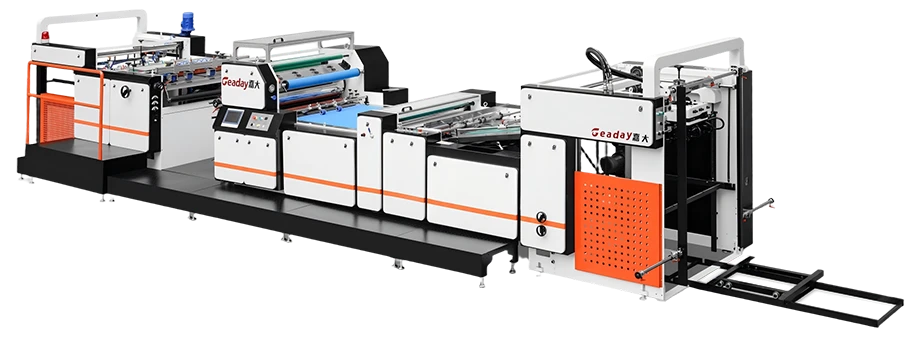
Let us put it this way: a pre‑coated film laminating machine differs from its alternatives primarily in adhesive preparation. Pre‑coated film comes with adhesive already applied and cured onto the film substrate, requiring nothing more than heat and pressure to bond. In contrast, wet laminating systems demand glue mixing, adhesive coating mechanisms, and drying tunnels — all of which introduce additional variables, cleanup requirements, and VOC emissions. From an operational perspective, the difference is like comparing a ready‑to‑use adhesive tape to a bucket of glue, a brush, and a drying rack. One simplifies the process; the other multiplies the steps.
How Pre‑Coated Lamination Compares to Other Approaches — and Why the Distinction Matters
Many buyers get trapped in the thermal‑vs‑cold debate without fully understanding the role of the film itself. Thermal laminating systems, which include both pre‑coated and in‑line adhesive applications, rely on heat to activate the bonding layer and typically operate in the 80°C to 130°C range. They produce exceptionally strong permanent bonds, with peel strengths often exceeding 200 g/inch, making them the preferred choice for packaging, book covers, and anything requiring long‑term durability. Cold lamination, by comparison, uses pressure‑sensitive adhesives and works at room temperature, which is ideal for heat‑sensitive materials like certain digital prints and photographic outputs, but the resulting bond is generally less aggressive and may age differently over time.
Where pre‑coated laminating equipment shines is in the elimination of wet adhesive handling. Wet or “instant” laminators require operators to manage glue viscosity, solvent evaporation, and drying time — all factors that introduce variability and increase the chance of defects. Pre‑coated film, by contrast, delivers consistent adhesive thickness and uniform activation properties from roll to roll. That predictability translates directly into fewer rejected sheets, less downtime for cleanup, and lower training requirements for new operators.
According to industry sources, some manufacturers have reported that switching from wet lamination to pre‑coated technology can reduce material‑related waste by approximately 15 to 20 percent, not because the film is inherently better, but because the process removes the most common source of operator error: improper adhesive application. For printing companies and packaging shops where margins are already tight, eliminating that variable alone can represent a significant competitive edge.
Why Slow, Foolish Choices Lead to Hidden Costs — and What the Smart Path Looks Like
Crunching numbers from the global market reveals why careful selection matters more than ever. The laminating systems market, encompassing equipment, materials, and consumables, continues to expand as packaging requirements grow more sophisticated across food and beverage, pharmaceutical, and consumer goods sectors. More growth means more suppliers entering the space — and more low‑quality machines dressed up with appealing specifications that do not hold up under real conditions
Consider the cost of a poor decision. A laminator that cannot maintain consistent temperature forces operators to run test sheets at the start of every job, wasting materials and labor. A machine with difficult roller access turns a five‑minute cleaning task into a thirty‑minute ordeal twice a week. An unreliable separation mechanism produces edge‑lifting that a customer will absolutely notice on a premium product. None of these expenses appear on the purchase invoice, but they accumulate relentlessly over the machine’s lifetime.
That is where a thoughtful approach to lamination workflow integration pays off — not just in lower operating costs, but in the freedom to confidently accept more demanding jobs without fear of failure. Operators who trust their equipment work faster. Supervisors who do not have to constantly inspect output can focus on higher‑value tasks. Businesses that consistently deliver flawless lamination build reputations that command premium pricing.
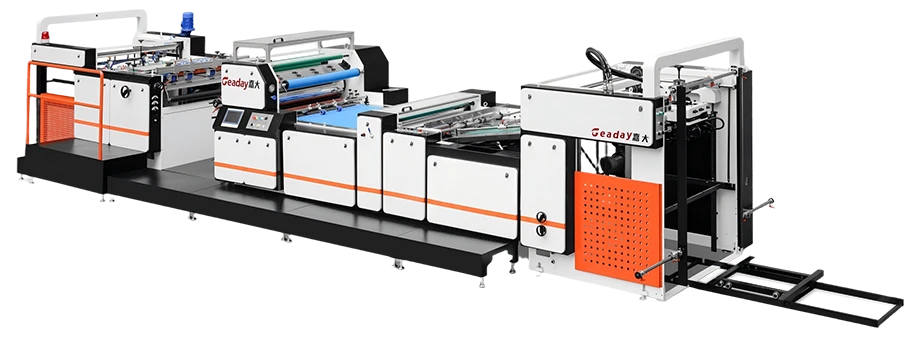
Beyond the machine itself, consider the ecosystem of consumables and support. Pre‑coated film is available in multiple finishes — gloss, matte, soft‑touch, and anti‑scratch varieties — and selecting the right match for your substrate and application is as important as the laminator itself. A machine that offers easy film loading, precise tension control, and fast roll changes will save more time daily than any marketing claim about “industry‑leading speed.”
After the Purchase: How Real‑World Support Makes or Breaks the Experience
No matter how well you select your equipment, every printing and packaging shop eventually encounters a problem that the manual does not cover. The heating element stops working in the middle of a critical job. The feeder starts misaligning sheets after a long production run. Small bubbles appear only on one side of the laminate, and no one can figure out why. Common troubleshooting issues like insufficient heating, roller contamination, uneven pressure, and film jams can stop production cold if operators lack clear guidance and quick access to replacement parts.
This is where the value of a responsive supplier becomes visible. A manufacturer that stocks spare rollers, heating elements, and control boards — and that offers clear diagnostic support — turns a potential week‑long shutdown into a short, manageable pause. The best equipment investments are not measured solely by the machine’s specifications, but by the full lifecycle cost of ownership, including how quickly problems get solved when they inevitably arise.
Many operators find that laminators with modular component design are significantly easier to maintain than those with integrated, proprietary assemblies. When a roller needs replacement, a modular machine allows the swap in minutes with basic tools. When a control board fails, off‑the‑shelf components mean no waiting for specialized parts from a distant warehouse. These design decisions, which rarely appear in glossy brochures, determine whether a machine serves you for a decade or becomes a headache after two years.
Making the Final Decision: What Your Daily Production Actually Requires
After reviewing technical specifications, market data, and comparative process analysis, the path forward becomes clearer. A pre‑coated film laminating machine works best for operations that value consistency over complexity, that want to minimize variables in the finishing process, and that cannot afford the downtime associated with wet adhesive systems. If your shop prints packaging materials, book covers, brochures, labels, or any product where surface finish conveys quality, pre‑coated technology typically delivers the most predictable results with the lowest operational overhead.
For shops handling digital print outputs — where toner‑based images can be heat‑sensitive — confirm that the machine’s thermal profile aligns with your specific substrates. Some models offer adjustable heating zones or lower‑temperature lamination without sacrificing bond strength. For shops running high volumes of corrugated or heavy paperboard, prioritize machines with robust roller construction and sufficient pressure capacity to handle 500 gsm and above.
The right choice does not come from the longest spec sheet or the lowest price tag. It comes from honestly answering three questions: What fails most often in your current process? What feature would save your operator the most time each day? And which supplier will still answer your call when a roller wears out three years from now? Getting those answers right will protect your production floor from the hidden costs of a foolish decision — and set you up for years of reliable, high‑quality output.