CN
CN May 05, 2026
Last Tuesday, a plant manager at a folding carton facility showed me something that’s become all too familiar. He pointed to a pallet of half-finished cosmetic boxes, each one waiting for a laminating step that couldn’t keep up. The rush order had already slipped by six hours, and the bottleneck wasn’t the offset press — it was the laminator. “We bought the fastest press on the market,” he said, “and then we stuck a 1970s-era finishing line behind it.”
That frustration is precisely why so many converting and packaging teams are rethinking the role their laminating equipment plays — not as a mere support function, but as a strategic driver of output quality, turnaround speed, and margin. While the term high-speed laminating systems gets tossed around, most converters don’t realize just how many distinct production headaches modern configurations can solve, beyond simply “running faster.” According to data from the Flexible Packaging Association, machine downtime and material waste together still account for roughly 20-25% of total converting costs in mid-size plants — costs that drop dramatically when laminating workflows are designed around flexibility, not just velocity.
Let’s walk through five concrete, high-ROI applications that have quietly reshaped what’s possible on a finishing floor.
1. Achieving Tamper-Evident Seals at Full Production Velocity
In pharmaceutical and medical device packaging, failed seal integrity isn’t just a print defect — it’s a recall risk. Many converters still handle tamper-evident lamination with older thermal systems that require a painful trade-off: run fast, and you risk micro-channels or edge lift; run slow, and you miss delivery windows.
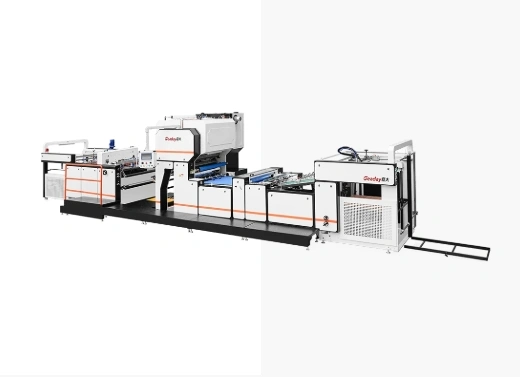
What’s shifted is the integration of closed-loop tension control and segmented heating zones. I’ve seen operators dial in a precise combination of nip pressure, dwell time, and film tension for BOPP-on-foil pharmaceutical blister lidding, then run thousands of linear meters without touching a single knob. The result isn’t just speed — it’s predictable speed. According to ISO 10993 compliance documentation for medical packaging, uniform adhesive activation across the full web width is what separates a validated process from one that lives in constant rework. Modern lines accomplish this with independently controlled cartridge heaters and real-time IR sensors that measure surface temperature on both the substrate and the film simultaneously. One pharmaceutical packaging supplier I spoke with reported that their rejection rate on child-resistant pouch lamination fell by over 60% after moving to a segmented calender design — because heat wasn’t bleeding into areas where it wasn’t needed.
2. Converting Short-Run Jobs from Cost Drain to Competitive Edge
Ask any specialty print shop about short-run laminating, and you’ll likely hear the same story: “By the time we set up the machine, the job is finished.” That economic mismatch has long pushed small-run work toward offline hand-fed solutions, sacrificing consistency for survival.
But an approach I’ve seen gain serious traction in commercial print and boutique packaging is the move toward modular, recipe-driven systems that recall job parameters digitally. Instead of 25-minute film changes, operators pull up a stored profile — film type, calender gap, speed curve, vacuum setting — and the machine re-configures itself in under three minutes. That shift changes the minimum viable run length from thousands of sheets to a few hundred. A large trade finisher told me they now profitably laminate runs as low as 200 sheets for specialty hang tags and wedding stationery, work they would have flatly rejected three years ago.
If your margins on short-run work have been suffering, it might not be the pricing — it’s the makeready overhead eating them alive. View modular laminating configurations that reduce changeover time.
3. Conquering Adhesion on Metallized and Bio-Based Substrates
Laminating onto metallized polyester or compostable PLA films used to be where you discovered your process window had a mind of its own. Traditional water-based adhesives would sit on the surface, never truly biting into the low-dyne substrate, and UV-curable alternatives often yellowed under heat.
The game changer has been the combination of corona pre-treatment stations mounted immediately ahead of the laminating nip, alongside precision-adjustable adhesive metering. ASTM D6868-21 for compostable packaging adhesion testing demonstrates that surface energy consistency must be maintained above 42 dynes/cm for many bio-based substrates — and achieving that inline, rather than hoping the stock arrived from the supplier still ready, eliminates a huge variable. I’ve watched a flexible packaging converter in the organic snack space switch from offline corona treatment to an integrated unit on their laminating system; they reported that their bond strength on metallized PLA pouches rose from marginal to consistently exceeding 2.5 N/15mm, while eliminating the contamination risk of handling sheets between two separate machines.
The lesson is clear: adhesion failures on modern sustainable substrates are rarely the adhesive’s fault — they’re a surface energy problem, and solving it at the point of lamination redefines what films you can run confidently.
4. Cutting Film Waste and Energy Use – Without Sacrificing Throughput
A common, costly misconception is that running at higher linear speeds automatically increases waste. In practice, many of the high-speed laminating systems I’ve analyzed show lower normalized waste per thousand sheets — provided the machine’s sheet registration and film advance are synchronized properly.
Waste spikes most often occur during acceleration and deceleration ramps, and during roll changes. Advanced servo-driven film feeders now splice on the fly, maintaining tension during the transition and eliminating the half-dozen wrapper sheets that typically get sacrificed. One folding carton plant reported that they trimmed annual BOPP film waste by nearly 9 metric tons simply because their new laminating line’s automatic splicing and precise edge-trim recovery system began reclaiming clean trim for recycling. From an energy standpoint, smart standby functions that drop heating zones to maintenance temperature during gaps in the feeder reduce kilowatt draw significantly over a shift — and the data is trackable per job, giving operators a clear view of consumption.
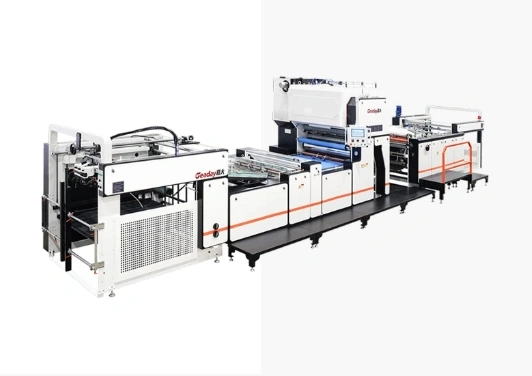
Combined, these improvements create an environmental story you can actually verify on your utility bill and waste manifest — not just a marketing bullet point. Explore how Geaday’s approach to laminating efficiency reduces consumable usage.
5. Seamlessly Plugging Laminating into a Hybrid Digital-Offset Floor
One of the trickiest integration challenges I hear about is the collision of digital and conventional workflows in the same plant. Variable-data digitally printed sheets often carry different surface characteristics than offset-printed stock, yet they land in the same laminating queue.
The solution that progressive converters have adopted is a laminating configuration that treats every sheet independently via camera-based registration and dynamic pressure adjustment. An automatic sheet inspection system reads the density and coating type of incoming stock, and a central controller adjusts the calender gap and film tension in real time — sheet by sheet, if necessary. This means a run of 500 variable-data book covers, some with heavy toner coverage and others with light inkjet output, can be laminated in a single uninterrupted workstream without remakeready. According to operators I’ve interviewed, the key is avoiding the assumption that laminating is a “dumb” downstream process; when it’s intelligent and data-aware, it becomes an enabler of the entire hybrid floor.
This capability isn’t science fiction anymore. It’s operational in plants producing personalized packaging, photobook covers, and even short-run cosmetic cartons where no two graphics are alike.
Pulling It All Together
If you’ve made it this far, you’ve probably identified at least one bottleneck or missed opportunity in your current laminating setup. The five use cases above — validated seals, short-run profitability, difficult substrate adhesion, waste reduction, and hybrid workflow integration — don’t all require the highest linear speed. They require a system that’s configurable, instrumented, and designed for the unpredictable realities of modern converting.
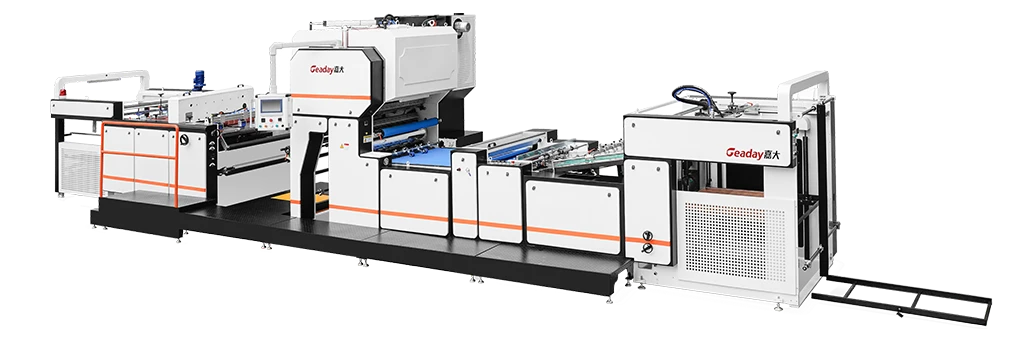
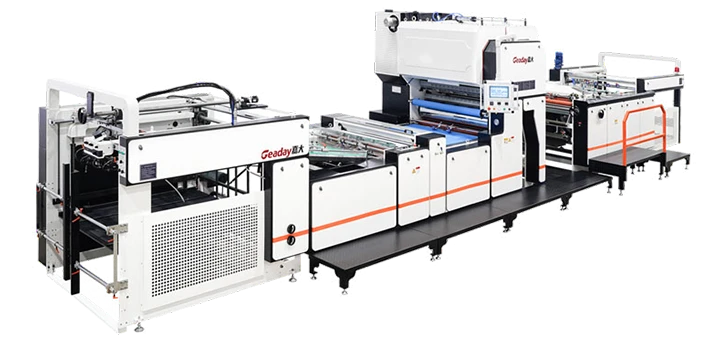
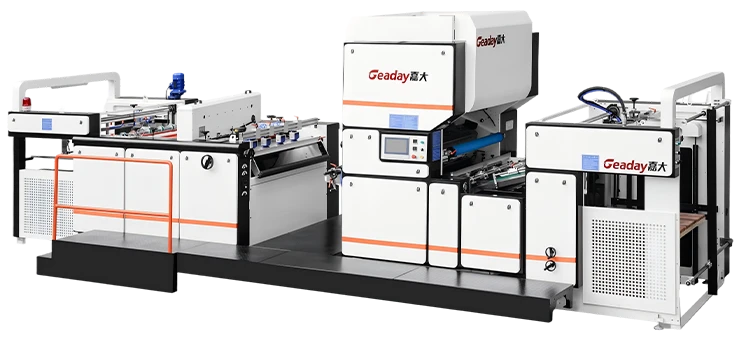
Geaday has been addressing exactly these pain points with its laminating technology. Instead of chasing a single headline speed figure, their philosophy centers on what I’d call functional speed: the net throughput you actually get across a mixed job environment. Operators can store complete job recipes, pre-set maintenance intervals, and track consumable usage per shift — all from a single panel that doesn’t require an engineering degree to interpret.
If you’re dealing with any of the challenges discussed — whether it’s short-run changeover delays, inconsistent adhesion on sustainable films, or a digital-offset hybrid floor that’s out of sync — the real next step is benchmarking your current numbers and seeing what a purpose-built configuration can actually deliver.