CN
CN May 13, 2026
It is 3 p.m. on a Tuesday. The shift supervisor calls you over to the rewind station. The laminate structure that ran flawlessly yesterday is now curling at the edges, creating telescoping rolls that will be rejected by your customer. You suspect a tension drift, but pinpointing the exact cause — without losing thousands of meters of expensive multi-layer web — feels like a gamble. This scenario is frustratingly common in flexible packaging, label converting, and industrial film operations, and it reveals a fundamental truth: web tension mastery is not just a setpoint on a screen; it is the silent heartbeat of your entire process.
In high-speed roll-to-roll laminating lines, even a 5% deviation from the optimal tension window can cascade into misaligned layers, inconsistent adhesive coverage, and costly downtime. Many converters still treat tension control as a static parameter rather than a dynamic process that must adapt to roll diameter changes, material stretch, and ambient conditions. This article digs into the science and practice of maintaining perfect web tension, providing actionable steps so you can stop chasing wrinkles and start running lean.
Why Tension Fluctuations Undermine Lamination Quality
Web tension is the controlled force applied along the material path to keep the substrate flat, wrinkle‑free, and precisely positioned. When tension is too low, the web can wander, leading to edge misalignment and air entrapment between layers. When it is too high, films stretch, adhesives squeeze out unevenly, and thin substrates such as 9‑micron PET can tear at the nip. With multi‑material structures — think PET/PE, aluminum foil composites, or bio‑based barrier films — each layer expands and contracts differently under stress, making uniform tension a moving target.
According to data from AIMCAL (Association of International Metallizers, Coaters and Laminators), tension‑related defects account for nearly 12% of all quality rejects in flexible converting. These numbers emphasize that tension control is not simply an operator skill, but a system‑level challenge that demands mechanical precision, sensory feedback, and adaptive control logic.
The Three Tension Zones You Cannot Afford to Ignore
Every laminating process has three critical control regions: unwind, process (nip), and rewind. The unwind zone must deliver a consistent feed rate as the roll diameter shrinks. The process zone, directly at the laminating nip, requires tight tension synchronization to maintain layer‑to‑layer registration. The rewind zone must build a uniform, hard roll without introducing stretch or trapped air. Most chronic tension problems arise at the transitions between these zones, where inertia, friction, and material memory clash.
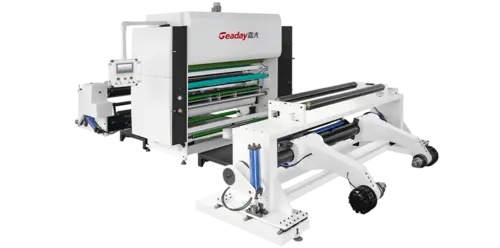
A common mistake is relying solely on manual dancer roller adjustments without a feedback loop. While a dancer provides valuable mechanical buffering, it cannot compensate for rapid fluctuations caused by out‑of‑round rolls or inconsistent pneumatic brake response. This is where closed‑loop tension control — pairing load cells with high‑response servo drives — becomes non‑negotiable for repeatable quality.
Step‑by‑Step: Calibrating Tension for Consistent Lamination
-
Profile Each Material First
Before setting any tension value, measure the modulus of elasticity for every substrate. A 12‑micron PET film behaves very differently from a 50‑micron LDPE. Record these values and use the most stretch‑prone layer as your limiting factor when setting process tension. -
Map the Tension Taper
In the rewind zone, constant tension is not your friend. Implement a taper that reduces force as the roll diameter builds, typically starting with a 20–30% reduction from core to full roll. This prevents telescoping and inner‑layer blocking. Validate the taper with a hardness tester regularly. -
Synchronize Unwind and Rewind with Real‑Time Data
Replace manual brake adjustments with diameter sensors or ultrasonic detectors that feed real‑time data to the drive system. If your unwind still uses mechanical friction brakes, consider retrofitting with electromagnetic particle brakes for proportional, fine‑grain control. Calibrate the zero point of all load cells after every maintenance cycle. -
Validate with Run‑Out Checks at Full Speed
Use a hand‑held tension meter or an inline precision load cell readout to verify that actual web tension matches your setpoint within ±2 N across the entire roll build. Document the readings for each job recipe. A simple log helps you spot a degrading bearing or idler roller long before it ruins a master roll.
Even with a flawless calibration process, manual routines consume time and introduce variability. If you are looking for ways to embed these steps directly into the machine intelligence, Link: integrated tension solutions for flexible web converting consolidate calibration, monitoring, and recipe management into one closed‑loop ecosystem.
The Hidden Costs of Manual Adjustment and Drift
Many converters postpone upgrading their tension architecture because they view it as a capital‑heavy overhead. However, the waste from a single out‑of‑spec master roll — combined with customer penalties and line downtime — can easily exceed the investment in a modern controller. Beyond material scrap, manual adjustment leads to slower ramp‑up speeds, constant operator intervention, and elevated reject rates on thin‑gauge or high‑value structures. Retrofitting existing roll-to-roll laminating lines with intelligent, load‑cell‑based tension modules delivers a typical ROI within six to nine months, according to case studies compiled by the Flexible Packaging Association.
While a retrofit is a viable path, converters investing in new capacity often ask what a fully integrated setup looks like. Link: precision tension control systems for film and foil laminating offer a glimpse into architectures where the mechanical web path and control electronics are designed as a single responsive system, not a collection of bolt‑on parts.
Preventive Practices That Lock in Tension Stability
Automation alone is not a silver bullet; disciplined practices make it reliable. Top‑performing converters standardize the following:
-
Temperature‑Compensated Load Cells: If your plant floor has ambient temperature swings of more than 5 °C, standard load cells can drift. Switch to temperature‑stabilized designs and verify calibration quarterly using certified weights.
-
Routine Idler Roller Inspection: A single sticky or misaligned idler roller adds unexpected drag that corrupts tension readings. During preventive maintenance, clean every idler in the web path and spin them by hand to feel for rough bearings.
-
Recipe‑Based Tension Profiles: Store proven tension recipes for each substrate combination in your control system. This eliminates operator keypad errors and significantly shortens changeover time, especially when a line runs multiple short‑run jobs per shift.
-
Real‑Time Monitoring Alerts: Set upper and lower tension limits that trigger an alert before a defect appears on the roll. Modern HMIs can trace tension trends and send an operator warning the moment the web force deviates from the golden band.
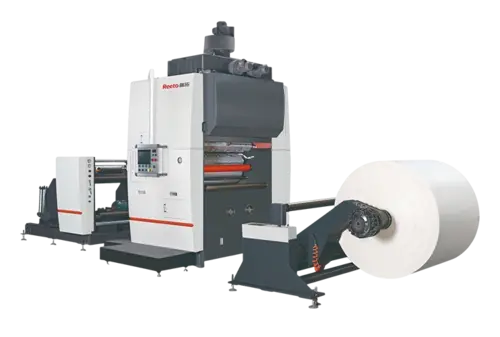
When specifying new roll-to-roll laminating lines, insist on digital tension profiling that natively communicates with the line’s main PLC and supports recipe‑based operation out of the box. This forward‑looking approach makes it far easier to adopt Industry 4.0 concepts like predictive maintenance and OEE tracking without costly third‑party integrations later. To see how such recipe‑managed profiling looks on the factory floor, Link: view a lamination line with automatic recipe management that showcases how storage of multi‑layer lamination recipes reduces human error.
When the Line Itself Becomes the Solution
You have probably noticed a theme: effective tension control is less about fighting the web and more about creating an intelligent, responsive system where mechanics and electronics converse seamlessly. This is where the equipment design philosophy matters from day one. Some manufacturers treat tension management as a peripheral assortment of components you have to stitch together yourself, while others embed it into the machine’s central architecture, with the tension logic, drive synchronization, and web path geometry engineered as a single, coherent whole.
If the thought of integrating multiple load cells, servo drives, material databases, and safety interlocks feels daunting, you are in good company. Many converters discover that partnering with an OEM that pre‑engineers tension intelligence saves months of debugging and slashes startup waste by 30–50%. Link: Discover how Geaday builds tension intelligence into every winding zone to explore a line design where closed‑loop tension is a core feature, not a retrofit afterthought. This approach has allowed label converters and flexible packagers to run ultra‑thin films at speeds exceeding 300 m/min without constant operator babysitting.
Every wrinkled meter is profit lost, and every telescoped roll is a relationship strained. While the toolkit provided here empowers you to tame web tension on any machine, a production asset designed with tension physics at its structural core turns consistent output into the default — not a daily battle. If you are looking to match a next‑generation laminating system to your specific material portfolio, Link: see Geaday’s material‑specific laminating solutions to start a conversation about your substrates, run speeds, and quality targets.
Disclaimer: This article provides general operational guidance and does not replace machine‑specific documentation. Always follow your equipment manufacturer’s safety instructions and perform maintenance according to their recommended schedules.