CN
CN Apr 16, 2026
After 15 years consulting for print and packaging facilities across Europe and North America, I’ve seen one upgrade consistently deliver the fastest and most reliable ROI: investing in faster, more consistent laminating technology. The high-speed pre coated film laminator machine has become a non-negotiable asset for shops struggling to meet tight deadlines, cut material waste, and keep up with rising customer quality standards.
The Silent Profit Drains of Outdated Laminating Equipment
Last spring, I visited a mid-sized packaging plant in Chicago that was losing $12,000 a month to laminating-related issues. Their 10-year-old semi-automatic machine ran at just 40m/min, required three full-time workers to operate, and produced so many bubbled or wrinkled sheets that their scrap rate hovered at 7%. Worse, during peak seasons, they had to turn down 20% of orders because they couldn’t keep up with demand.
This isn’t an isolated story. According to Smithers’ 2026 Global Print Finishing Automation Report, print finishing automation gaps account for 41% of production delays in the industry. Traditional laminating equipment is particularly problematic: it wastes up to 28% of glue due to uneven application, causes 35% of all post-print defects, and has a 3x higher downtime rate than modern systems.
Many shop owners put off upgrading because they focus only on the upfront cost, but they fail to account for the hidden losses: overtime pay for workers stuck running slow machines, raw material waste, rejected orders, and lost customer loyalty. These costs add up far faster than most people realize.
What Makes a Laminating System Worth Your Investment?
Not all laminating machines are created equal. I’ve tested dozens of models over the years, and the best ones share four key characteristics that separate them from cheap, unreliable alternatives.
First, they deliver consistent speed without sacrificing quality. Many budget machines claim high speeds, but they can only maintain those speeds on thin, standard paper—thicker packaging materials cause jams and defects. Second, they have precision glue application systems that minimize waste. Third, they use uniform heating technology to prevent bubbles and wrinkles. Finally, they’re automated enough to reduce labor dependency.
Traditional semi-automatic and low-speed automatic machines fail on most of these counts. They require constant manual adjustment, produce inconsistent results, and still need 2-3 workers to operate. For shops looking to scale, these machines become a bottleneck rather than a solution.
How Geaday’s Laminating Solutions Fix Your Most Persistent Problems
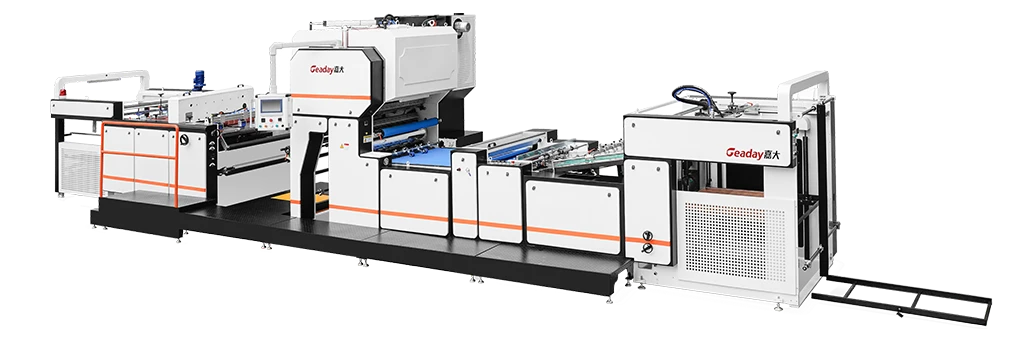
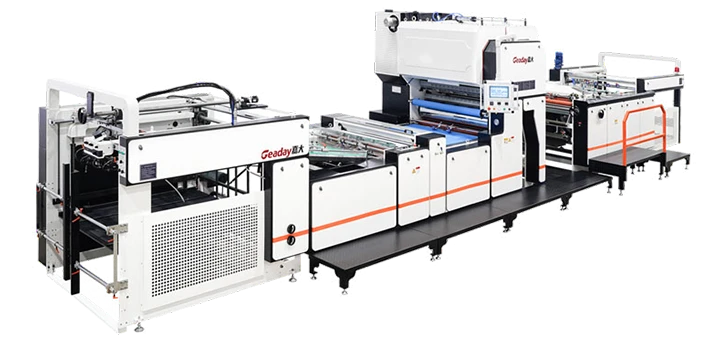
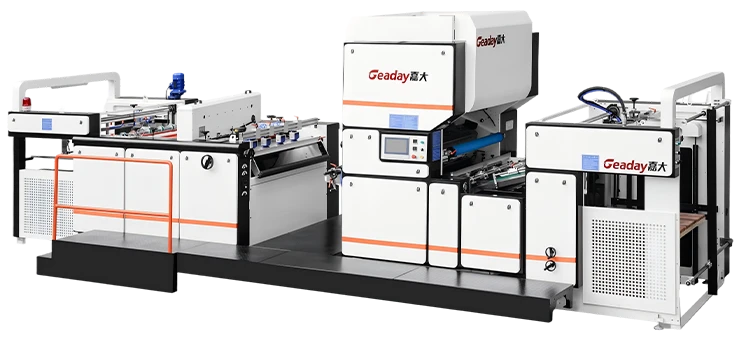
Geaday has been designing pre-coated film lamination for packaging and print finishing equipment for over a decade, and their JDM-760Y model is one of the most well-engineered machines I’ve worked with. It addresses every major pain point I see in factories every day.
Blazing Fast Speed With Zero Downtime
The machine achieves an operating speed of up to 120m/min, which is 3x faster than most standard models. Its continuous paper feeding system eliminates the downtime associated with reloading paper stacks, allowing you to run uninterrupted production for hours at a time. This means you can handle more orders in less time, even during peak seasons.
Precision Gluing That Cuts Material Costs
One of the biggest wastes in laminating is excess glue. Geaday’s chrome-plated gluing rollers have a precision of less than 0.008mm, which ensures an even, thin layer of glue is applied every time. This cuts glue consumption by up to 30% compared to traditional machines, saving you thousands of dollars a year in material costs.
Uniform Heating for Flawless Results
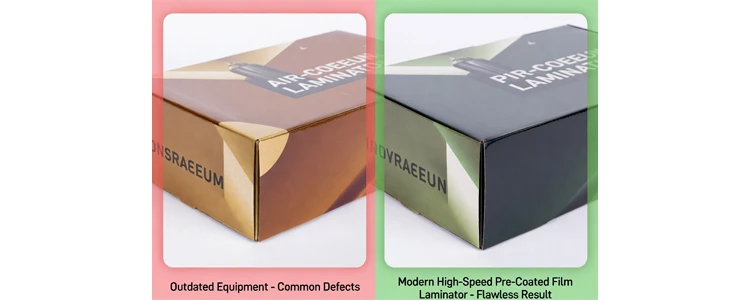
Bubbles and wrinkles are the most common laminating defects, and they’re almost always caused by uneven heating. Geaday uses an electromagnetic heating laminator system that distributes temperature uniformly across the entire roller surface. This eliminates hot spots and cold spots, ensuring every sheet comes out perfectly laminated, no matter the material thickness.
Automation That Reduces Labor Needs
The entire process—from automatic paper feeding and powder removal to laminating and finished product collection—is controlled by a PLC system with an intuitive touch screen interface. This means you only need one worker to monitor the machine, freeing up your staff to focus on other tasks.
I recently worked with a book publisher in Germany that upgraded to this system. Before, they could process 8,000 book covers a day with three workers. After installation, they process 25,000 covers a day with just one worker. Their defect rate dropped from 4.5% to 0.2%, and they paid off their investment in just 6 months.
Versatility That Grows With Your Business
One of the biggest advantages of Geaday’s system is its versatility. It handles a wide range of materials, from 128g/m² paper to 500g/m² cardboard, making it perfect for high-speed book cover laminating, premium packaging boxes, advertising posters, and even photos. The maximum laminating size of 760×800mm accommodates most standard print sizes, so you don’t have to turn down jobs because your machine is too small.
All main components are sourced from internationally renowned brands, which ensures the machine is durable and reliable. I’ve seen Geaday machines run 24/7 for years with minimal maintenance, which is a huge plus for factories that operate multiple shifts. We also offer custom integration solutions to connect the machine to your existing production line, so you don’t have to replace your entire setup.
ROI Calculation: How Quickly Will You See Returns?
The most common question I get from shop owners is, “How long will it take to get my money back?” The answer depends on your current production volume and labor costs, but for most medium-sized facilities, the payback period is between 6 and 8 months.
Let’s do a quick calculation based on average industry numbers. Suppose you currently have three workers running your laminating machine, each earning $3,000 per month. That’s $108,000 per year in labor costs. Add in $32,000 per year in glue waste, $25,000 per year in scrap and rejected orders, and $10,000 per year in maintenance costs, and your total annual cost for outdated equipment is $175,000.
With Geaday’s system, you’ll only need one worker, saving $72,000 per year in labor. You’ll save $9,600 per year in glue, $24,500 per year in scrap, and $6,000 per year in maintenance. That’s a total annual savings of $112,100. Even with the upfront cost of the machine, you’ll be in profit within a year.
For any print or packaging facility looking to upgrade its finishing line and stay competitive in today’s fast-paced market, the high-speed pre coated film laminator machine is no longer a luxury—it’s a strategic investment that will pay for itself many times over.
At Geaday, we don’t just sell equipment. We partner with our clients to find the best solution for their specific needs. Whether you’re a small print shop or a large packaging manufacturer, we have the expertise and experience to help you streamline your production process and grow your business.
Contact us for a free no-obligation consultation: https://www.geaday.com/contact