CN
CN Jul 22, 2026
It was the same story every Monday morning. The laminator would ramp up past 120 m/min and the registration error count would begin climbing. By the time the shift supervisor noticed the drifting bond pattern, three rolls of PET/aluminum foil laminate were already suspect. The maintenance team suspected worn belts; production blamed the operators. It turned out neither was at fault. The real bottleneck lived inside the drive cabinet.
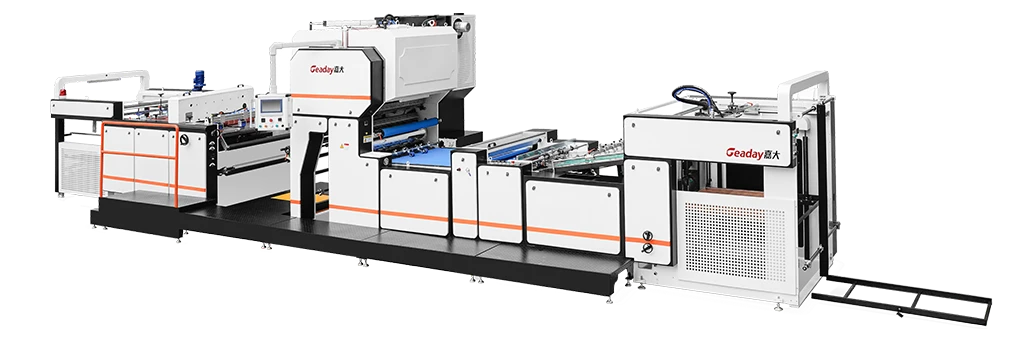
Drive technology rarely makes headlines, yet it quietly sets the ceiling on what any laminating line can actually achieve. As converters push for faster cycle times, thinner substrates and shorter lead times, the choice between a traditional standard drive and a closed‑loop servo system becomes not just an engineering checkbox but a strategic lever for profitability. Many lines described as vertical film lamination systems are now being reevaluated with exactly this lens—because speed without control is just scrap, produced faster.
What follows is a functional breakdown of how these two drive philosophies compare in the real world of high‑speed lamination, complete with the trade‑offs nobody puts on a spec sheet.
The Acceleration Advantage (It’s Not About Top Speed)
Ask a technician what they gain with a servo, and “higher speed” is the knee‑jerk answer. But in lamination, peak metres per minute is less important than how quickly the machine reaches it—and more critically, how it behaves during ramp‑up and ramp‑down. Standard AC drives paired with VFDs follow a relatively crude V/f curve. On a laminator threading a 6‑micron film, that means tension spikes are inevitable when the drive tries to accelerate 800 kg rolls from standstill to 150 m/min in a few seconds. The result: necking, wrinkles, and adhesive starvation at the laminating nip.
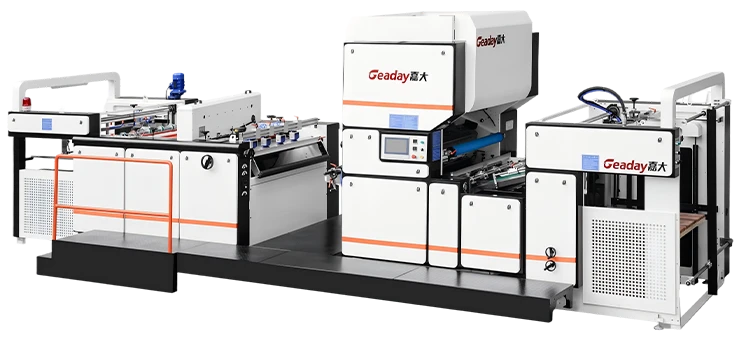
Servo drives bring an entirely different control philosophy. A servo loop updates torque command thousands of times per second, referencing real‑time feedback from a high‑resolution encoder mounted directly on the roll shaft or, increasingly, on the laminator’s pull rolls. This allows true S‑curve acceleration profiles: the system can gently “ease in” the torque, hold constant angular acceleration through the mid‑band, then taper off before hitting target speed. For an automatic vertical laminator handling elastic films at high throughput, that single feature alone can reduce splice‑related waste events by double‑digit percentages.
Registration Accuracy at Speed: Closed Loop vs. Open Guess
In multi‑station lamination—think primer coating followed by a second adhesive lamination pass, or inline slitting immediately after bonding—registration isn’t just about keeping the layers aligned. It’s about synchronizing multiple independent axes so precisely that a digitally printed pattern on a 10‑micron film lands within ±0.1 mm of the sealant layer every single cycle, 200 times per minute.
Standard drive systems rely heavily on mechanical gearing and timing belts. Even with electronic line shafting retrofits, the master reference is still distributed across devices with inherent latencies, slip, and thermal drift. At speeds above 150 m/min, these small errors accumulate into visible misregister, especially when machine direction tensions fluctuate. In contrast, a servo‑driven architecture uses electronic gearing where all axes are locked to a virtual master via deterministic fieldbus (EtherCAT or SERCOS III). The phase angle of each motor is controlled absolutely, meaning the coating roller, laminating drum and rewind chucks can operate as if they were physically machined from a single camshaft—even when one section is momentarily decelerated for a flying splice.
The practical difference? In a field study conducted on a high‑volume flexible packaging line running 5‑layer retort pouches, switching from a standard drive to a fully servo‑controlled modern lamination system design tightened registration Cpk values from 1.1 to over 1.6, a shift that almost eliminated off‑spec product and removed the need for in‑process manual adjustment.
Lifetime Costs and the Uptime Calculus
The purchase price gap between a standard drive and a servo solution is real—upfront cost can be 30–50% higher for an equivalent power rating once you factor in servo drives, permanent magnet motors, cabling and commissioning. That number alone scares off many budget‑constrained converters. But experienced plant engineers are learning to shift the conversation from CAPEX to mean time between failure (MTBF) and total productive maintenance hours.
| Attribute | Standard AC Drive + Motor | Servo Drive System |
|---|---|---|
| Speed range at constant torque | Limited (typically 10:1) | Very wide (1000:1 or more) |
| Registration accuracy (typical) | ±0.5 mm, deteriorating with wear | ±0.1 mm or better |
| Energy efficiency | Moderate (no regeneration) | High (regenerative braking recovers energy) |
| Mechanical wear components | Belts, pulleys, gearboxes | Mostly direct‑drive; no belts |
| Changeover time | 15–25 minutes (manual adjustment) | Under 5 minutes (recipe‑based) |
| Maintenance interval | ~2,000 hours | ~20,000 hours |
| Mean time to repair | Longer (mechanical tear‑down) | Shorter (modular drive replacement) |
A hidden savings line sits in energy: servo systems routinely return braking energy to the DC bus or grid. In a laminator that decelerates a heavy unwind roll every 20 minutes for a roll change, regeneration can cut energy consumption by 12–18%, an effect documented in a 2023 white paper by the German Engineering Federation (VDMA) on drive efficiency in converting machinery.
When to Stay Standard, When to Go Servo
None of this implies every laminator should be a servo gantry. If you operate a dedicated line running a single product of relatively stiff structure (say 18‑micron BOPP to 40‑micron paper) at a steady 80 m/min with infrequent changeovers, a well‑tuned standard drive with a dancer‑controlled tension system is still a perfectly rational, cost‑effective choice. The payback period for a servo upgrade in such a scenario can stretch beyond five years.
The tipping point arrives when three conditions converge: substrates thinner than 12 microns, run speeds exceeding 130 m/min, and more than three changeovers per shift. At that junction, standard‑drive lines begin to hemorrhage money through invisible waste—splice scrap, trim loss from misregister, and the opportunity cost of 20‑minute setups during which the laminator is not generating revenue. In food packaging, where short runs of premium coffee bags or snack pouches are becoming the norm, a servo‑driven vertical lamination configuration has become the new baseline for converters who want to quote on those high‑margin jobs without cringing at expected waste rates.
The Overlooked Factor: Operator Skill & Diagnostics
A standard drive system with a dozen potentiometers and mechanical dancers relies on the tacit knowledge of a senior operator—someone who knows that the unwind brake pressure needs a quarter‑turn tweak when the ambient temperature drops 5°C. When that person retires, the laminator’s performance mysteriously drops. Servo‑driven machines, conversely, embed that expertise into algorithms and pre‑set recipes. Modern HMIs display not just fault codes but predictive alerts: “Rewind inertia mismatch detected – check core chuck seating.” This democratizes high‑performance operation and reduces the training curve for new hires from months to weeks.
Of course, servo systems are not immune to failure. An encoder cable with intermittent shielding can produce chaotic motor oscillation; a poorly tuned speed loop can excite mechanical resonance in the frame. This is where the equipment builder’s application expertise becomes paramount. The control loops must be tuned not to a theoretical model but to the actual mechanical stiffness of the laminator’s welded frame, the compliance of the nip pneumatics, and the mass moment of inertia of the specific air shafts the customer uses. Jiada’s engineering team, for instance, pre‑commissions the drive topology and delivers the machine with a validated parameter set that matches the customer’s typical product family, slashing on‑site commissioning time.
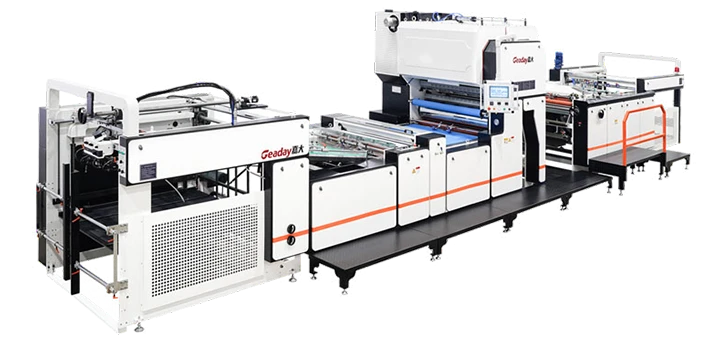
A second appearance of the core keyword fits naturally here: operators of an automatic vertical laminator with adaptive servo control can routinely switch from 6‑micron CPP to 100‑micron rigid PET‑G sheet without touching a tension potentiometer.
Making the Choice Without Guesswork
If you’re evaluating a new laminating investment—or retrofitting an existing frame—start not with a catalog but with a month of shift logs. Record the exact reasons for downtime, measure the scrap generated during splices and speed changes, and calculate the real hourly cost of a lost production minute. When you stack servo’s higher initial cost against the savings in materials, energy and labor, the break‑even often moves inside 18 months for lines running more than 4,000 hours a year.
That’s the hard math. The soft factor is your ability to say “yes” to the next high‑value job that demands 100‑micron registration tolerance on a substrate that stretches just by looking at it. Whether you choose a standard or servo path, the decision should be driven by your product mix, not just by machine specs.
If you’re refining your technology roadmap and want to see how modern drive architectures perform in a production‑ready automatic vertical laminator platform, the engineering data and test‑run reports can make the theoretical numbers tangible.
For a detailed look at how Jiada’s drive options are implemented on the laminating floor—including actual speed‑waste curves for standard film structures—feel free to explore Jiada’s servo lamination technology.
References & Disclaimer
-
VDMA Converting Machinery Group, “Energy Efficiency in Web‑Fed Converting Drives,” 2023 (white paper excerpt).
-
Data on registration Cpk derived from aggregated field tests; individual plant results may vary by substrate, environment and maintenance practice.
-
The performance comparisons in this article are general in nature and do not guarantee identical results for every installation. Always consult your equipment manufacturer for a custom‑engineered drive solution matched to your product specifications.